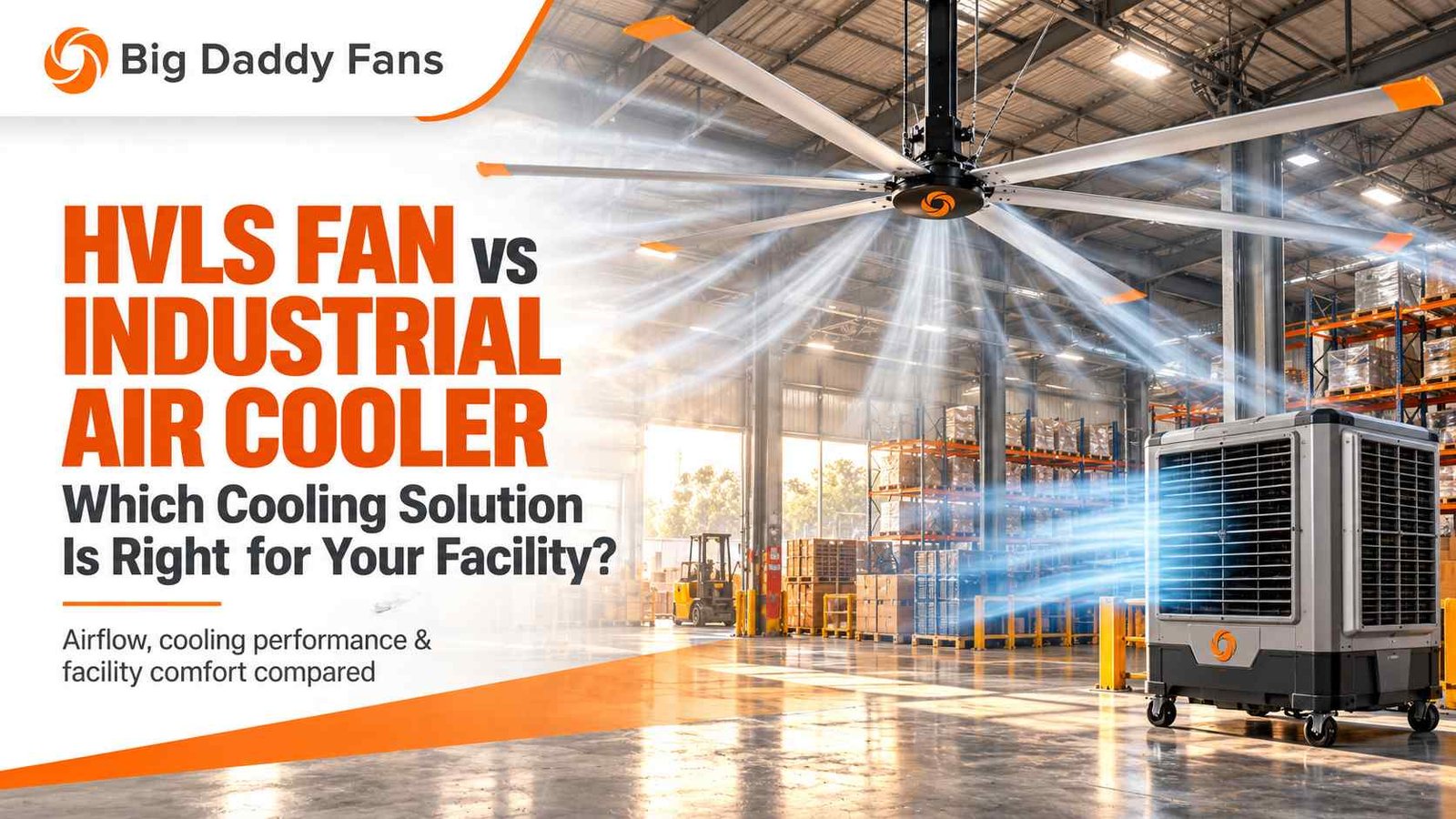
You know how hot it gets on a factory floor in the middle of summer. Warehouses and manufacturing floors are brutal. Workers feel it. So does output. So which one should you choose, an HVLS Fan or an industrial air cooler? It comes down to one question.
Are there areas in your facility that would benefit from better airflow or cooler air? If yes, here is a discussion of both options for industrial cooling. They are different and suit different situations.
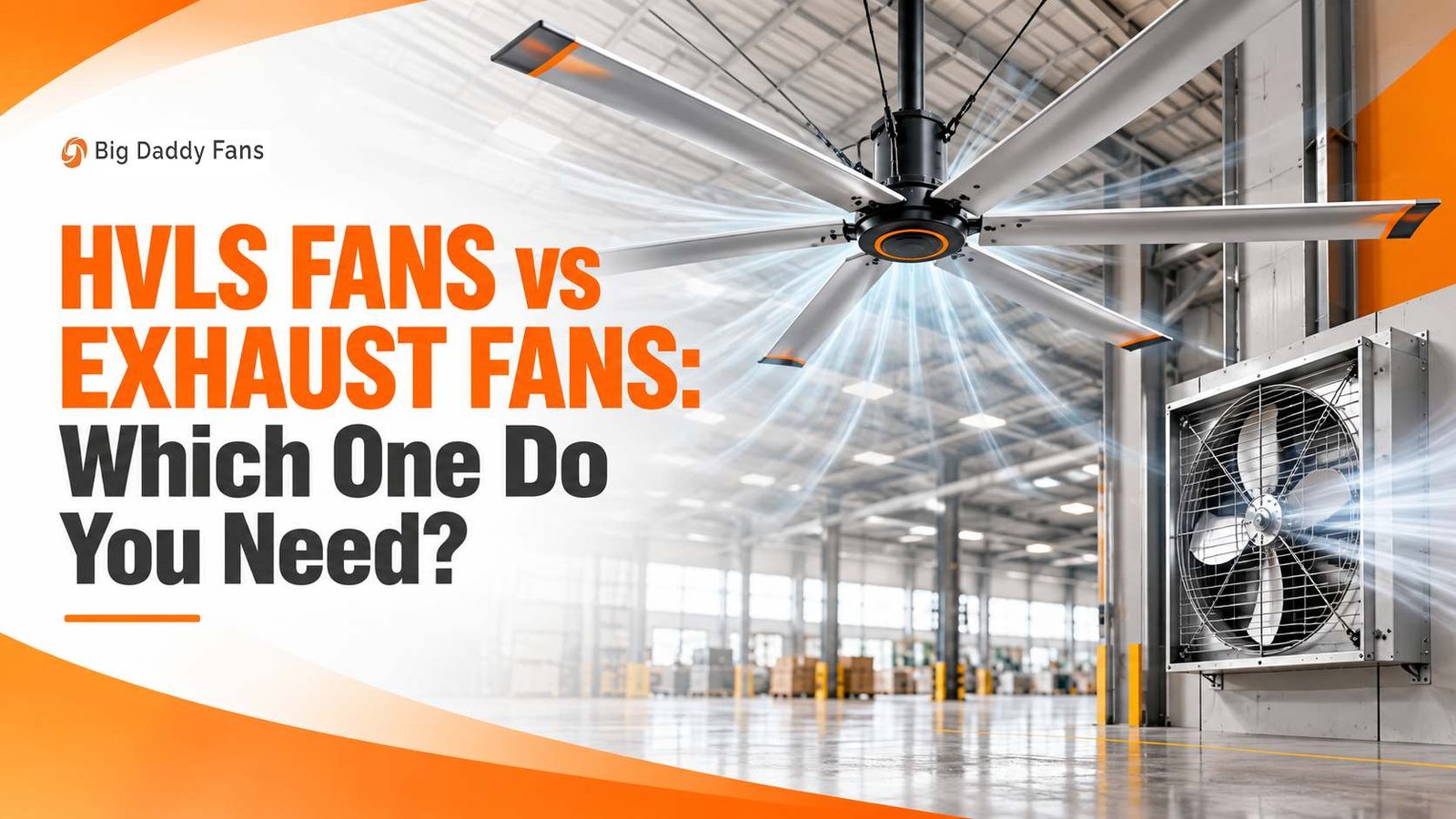
An HVLS Fan (high volume, low speed) moves a lot of air over a large area. The moving air makes people feel cooler. An Industrial Air Cooler does just the opposite. It cools the air entering the system by evaporating water and sends it to the workspace.
|
Comparison Factor |
HVLS Fan |
Industrial Air Cooler |
|
Main function |
Circulates existing air |
Cools incoming air through evaporation |
|
Cooling effect |
Improves perceived comfort |
Lowers incoming air temperature |
|
Best climate |
Works across many climates for air movement |
More effective in hot, dry conditions |
|
Humidity |
Does not add moisture through evaporation |
Adds moisture to the air |
|
Water requirement |
No water required for cooling |
Requires a water supply |
|
Typical application |
Large, open factories and warehouses |
Hot workspaces needing additional cooling |
When the issue is lack of uniformity, fresh air or comfort for the workers on a large floor, an Industrial HVLS Fan is the natural answer.
One thing to keep in mind: An HVLS fan will not reduce the air's actual temperature. Are you looking for some cool air in your facility for temperature-sensitive processes? But a fan alone might not be enough.
Use an Industrial Air Cooler when you want to lower the air temperature entering your system but don't want to use a refrigeration-based air conditioning system.
When it's wet weather, evaporative cooling is less effective. Consider water consumption, maintenance, and ventilation.
Yes, you can. An HVLS Fan combined with an Industrial Air Cooler will provide cool air over a greater work area. The cooler lowers the temperature of the air flowing into the cooling system. The fan then circulates the air across the work areas. Don't neglect placement and airflow planning, as these are the key to the outcome.
If you choose the wrong cooling equipment, you'll have unhappy employees and higher operating expenses. The type you choose will be determined by the climate of your facility, the layout, and the ventilation and cooling requirements.
Big Daddy Fans supplies HVLS fans and industrial air coolers for factories, warehouses, and commercial buildings. Visit Big Daddy Fans to explore both options and find a cooling solution that fits your workspace.