Heat trapped near machines, damp corners, and stale air can make an industrial building uncomfortable. Wall mounted exhaust fans can help push unwanted indoor air out. But choosing a fan by blade size alone is risky. Good ventilation depends on airflow, replacement air, your building layout, and the pollutants involved. Here’s what to check before you buy.
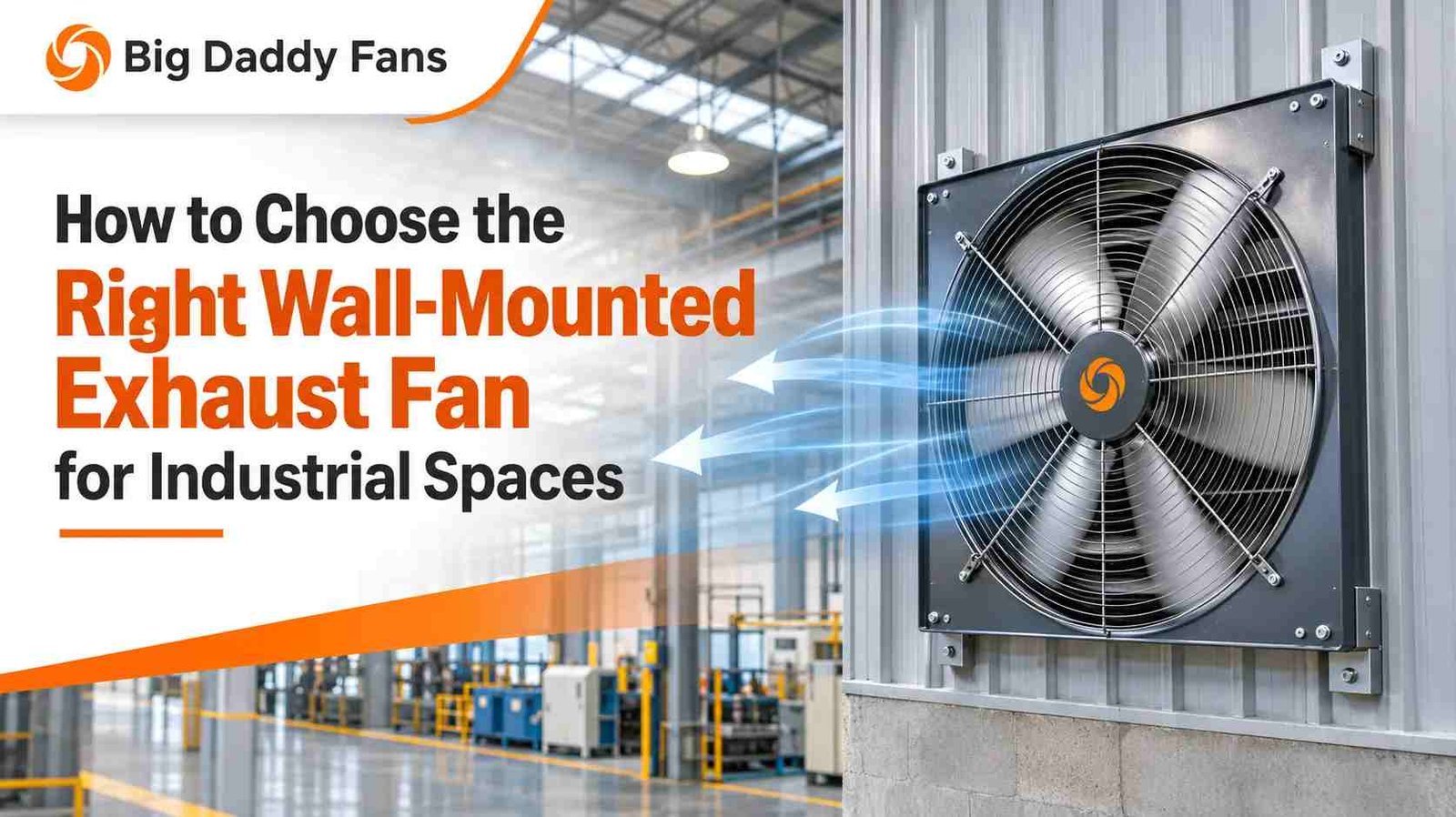
A wall-mounted exhaust fan moves indoor air outside through an opening in the wall. When fresh air can replace what leaves, it helps remove excess heat, humidity, and general airborne contaminants. It doesn’t automatically catch hazardous fumes at the source. It doesn’t replace a properly designed dust-collection system either. Those jobs need a specialist assessment.
Start with the ventilation problem. Then compare equipment specs against your building conditions, operating schedule, and maintenance needs.
Measure the floor area and ceiling height to estimate room volume. An engineer can then work out the right ventilation rates. They’ll consider heat output, occupancy, and the applicable standards. Compare rated airflow in cubic meters per hour or cubic meters per minute. Don’t assume a bigger diameter guarantees enough performance.
Air that leaves the building has to be replaced. Without suitable intake openings, negative pressure can cut fan performance. It can also interfere with doors or combustion appliances. Place intakes and exhaust outlets so fresh air doesn’t short-circuit straight back outside. Think about prevailing winds and nearby contamination sources.
Confirm wall strength, opening size, weather protection, guards, and safe maintenance access. Industrial spaces may need corrosion-resistant materials, especially around moisture or chemicals. Choose motors and electrical protection suited to the environment. Hazardous atmospheres need specifically rated equipment. An ordinary exhaust fan won’t do.
Review power use alongside the airflow the fan actually delivers. Don’t only look at motor horsepower. Ask for operating noise data and for performance under the resistance of louvers or guards. A fan that runs all day should balance ventilation needs against electricity cost and worker comfort.
Check access to blades, shutters, bearings, and motors. Confirm how often you need to clean it, what replacement parts cost, and what service is available. Where it fits, thermostats or humidity controls can cut needless running. Safety-critical extraction must follow its engineered control requirements.
Typical uses include factories, warehouses, workshops, garages and agricultural buildings. Needs differ. A warehouse may prioritize heat removal. A workshop that makes harmful fumes needs dedicated source capture. Food-processing and greenhouse sites may need extra hygiene or humidity controls.
Before you order, ask suppliers for airflow data, installation drawings, electrical requirements, warranty terms, and a site recommendation.
A noisy workshop might tempt you to fit another fan right away. But if fresh air can’t reach the work area, one more exhaust opening may do very little.
Big Daddy Fans makes industrial wall-mounted exhaust fans, including BDF-700 and BDF-1380 models. It also makes FRP exhaust fans for uses that need corrosion resistance. Our range serves factories, warehouses, workshops, and agricultural facilities.